Posts

Showing posts with the label Russia

'Memory Wars': a three-part series by Jack Conrad

Image
Konstantin Yuon New Planet (1921) Jack Conrad is a leading member of the CPGB-PCC and a frequent writer for the Weekly Worker . His 2022 three-part series describing Leon Trotsky's 'The Lessons of October' is of considerable interest given how central the work is in understanding the Russian Revolution from a Bolshevik's perspective. Jack contends that Trotsky's interpretation of events should be questioned and overcome. What follows is my reflection on the series.  Part 1: The history of 1917 is often used to justify sectarian existence: "if the Bolsheviks could do it, so can the chosen confessional sect or the broad left." this interpretation relies on a misrepresentation of the Bolshevik Party. 'The Lessons of October' is conventionally used to understand the Bolsheviks' program. Much of the left, even mainstream Communism (minus Trotsky's name) adhered to his account of events.  Trotsky claims that while the Bolsheviks did not seek to j...

Important points from Lenin's 'What is to be Done'

Image
  Delegates to the 2nd RSDLP congress in 1903 The following is a list of important points from Lenin's 1901-2 work "What is to be Done." Important works to read to understand the context of the work include Lars Lih's "Lenin Rediscovered," Neil Harding's "Lenin's Political Thought," and Hal Draper's " The Myth of Lenin's 'Concept of the Party .'" I have selected three points from each chapter.  Preface: The polemical side of this work against RD was tacked on at the end after they published a piece against Iskra. It was originally intended to be a work directed towards building the party, not a statement against economism. The Social Democrats and Economics exist within the same party but speak "different languages." This must be resolved prior to any unity.  Lenin knows that true economism ended years ago, but RD epitomizes the same sense of disorganization and confusion within the party. If any remnants...

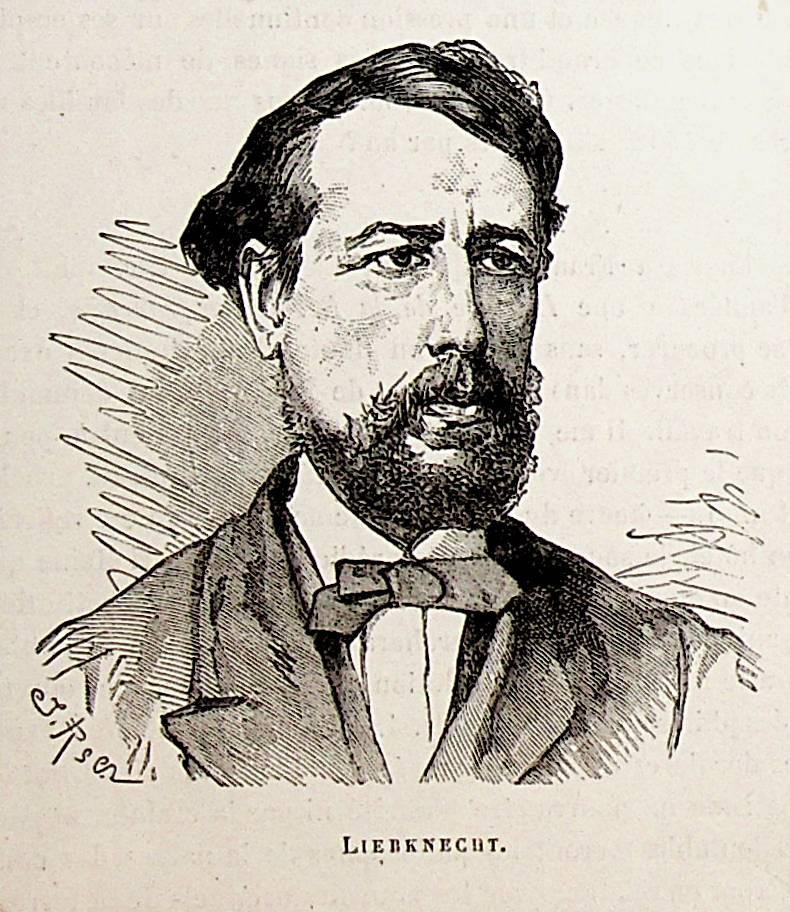
Summary of Wilhelm Liebknecht's 'No Compromise' (with Lenin's Preface)

Image
How should socialists in a party use their position in bourgeois political bodies? When should a socialist party engage in electoral politics, and when should they abstain? When is it acceptable to make a compromise, and when does a compromise become unacceptable? Overall, what positive and negative lessons can be learned from the theory and practice of Kautsky and Liebknecht and the SPD, Lenin and the RSDLP, and (a bit) from the independent socialist Alexander Millerand in France? Lenin's Preface Liebknecht’s work is important for the RSDLP in the context of the elections to the second Duma. (Elections begin in late 1906 and the Duma runs from February to June of 1907). The RSDLP can learn from Liebknecht on the question of forming agreements with rival parties. Here in Russia, we are concerned about forming a block with the Cadets. The cadets (moderate constitutional democrats - CD = ‘ka’ ‘deh’) were in the majority during the first duma. They were originally more to the left but...