Posts

Showing posts with the label Workers

The Salaried Masses

Image
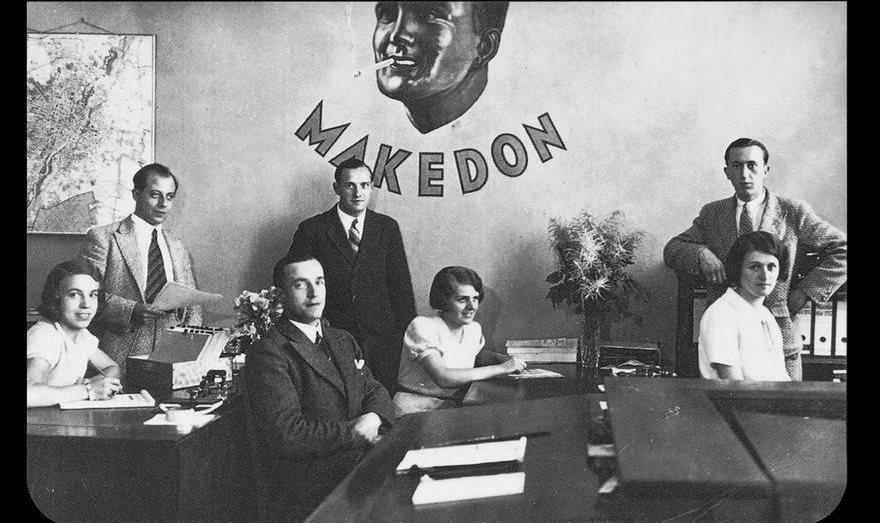
Siegfried Krakauer's  The Salaried Masses  explores the lives, the hopes, the dreams, and ultimate dissapointments of Berlin's pracarious middle class (named the "salariat" by Walter Benjamin) in the late 1920s. This is a class of people who are alienated from their work but paid just enough to consume a little extra. The salaried masses are immersed in Adorno's culture industry and suffer from Marx's alienated labor. They are unhappy but not desperate. Whereas the unemployed consider killing themselves, the salaried masses have just enough auspicious consumption to keep them thinking too hard about what's going on. In fact, as one interviewee remarks, thinking too hard is a distraction from what would otherwise be more interesting. The salaried masses, young and surrounded by commodities, have absorbed the ideas of the bourgeoisie, much like the characters in Georges Perec's 1965 novel  Things: A Story of the Sixties .  Alas, a mass of things does not...

Revolutionary Rehearsals: France 1968

Image
  (the boss needs you, you don't need him) “The story of terrorism is written by the state and it is therefore highly instructive… compared with terrorism, everything else must be acceptable, or in any case more rational and democratic.” - Guy Debord, The Society of the Spectacle, 1967.  "On Wednesday the undertakers went on strike. Now is not the time to die."  - Eyewitness to mass strike on May 14, 1968. "The crisis was infinitely more serious and profound...it was not my position that was in question, it was general de Gaulle, the Fifth Republic, and, to a considerable extent, Republican rule itself." - Prime minister Georges Popidou, May 25, 1968. "May ’68 was the biggest mass upheaval in the history of France and the concurrent wildcat general strike was the most important strike in the history of the European workers movement since World War Two. Nowhere else was the rejection of the new model of consumerist life more profound, or...

Revolutionary Rehearsals

Image
  A march by supporters of the Cordones Industriales in the Chilean capital of Santiago (1970).  What can we learn from the past? Over the next several months I'll be talking with a friend about the book Revolutionary Rehearsals, edited by Colin Barker.  The synopsis reads: "Five times in the last 35 years, the working class has posed a radical alternative to the status quo. Although none of these struggles ultimately achieved their goals, they were 'revolutionary rehearsals' that hold important lessons about the struggle for socialism under modern conditions." I'll make five separate posts sharing my notes and our thoughts about the five revolutionary rehearsals examined in the book - France 1968, Chile 1972, Portugal 1974, Iran 1979, and Poland 1980.

The Monster

Image
One week has passed since a massive 7.1 magnitude earthquake struck Central Mexico on September 19, destroying building and taking lives in the states of Puebla and Morelos, and parts of Mexico City. At publication, the New York Times cites at least 326 people killed – 186 in Mexico City – and some 50 collapsed buildings. Two weeks earlier, parts of southern Mexico and Guatemala were hit by an 8.2 magnitude quake - the largest in over a century. Cellphone footage from the 19th shows the unfolding disaster, as office workers rush out of buildings and into crowded city streets, while buildings sway, small fires catch, and waves rock tourist-packed gondolas at the Floating Gardens of Xochimilco. Incredibly, this latest quake happened 32 years to the day of the infamous 1985 Mexico City earthquake - a massive 8.0 magnitude tremor that, along with several aftershocks in the proceeding days, killed some 10,000 people and ruined nearly one third of all the city’s buildings. Sinc...

AT&T Workers Strike Across the Country

Image
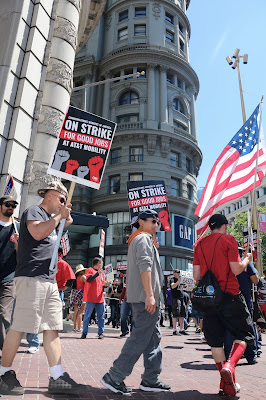
On Friday, 40,000 AT&T workers in phone sales (mobility) and landline and cable installation went on strike across 36 states. In California and Nevada, workers (unionized with the CWA) have been on the job without a contract for over a year. The company's CEO, Randal Stephenson, was recently given a raise and now makes over $12,000 an hour. Meanwhile, mobility workers are being offered a 40 cent wage increase that means nothing in the face of increasing living costs, especially in the Bay Area. In addition, the company wants to relocated call center jobs to Mexico, the Philippines, the Dominican Republic, increase the amount workers pay for health insurance, cut sick time, and increase a highly punitive points based penalty system in which workers would face disciplinary actions after using a fourth sick days.  Journalist David Bacon reports that "AT&T is the largest telecommunications company in the country with $164 billion in sales and 135 million wireles...