Posts

Showing posts with the label Walter Benjamin

8 Thermidor XXXVIII

Image
"The consciousness of exploding the continuum of history is peculiar to the revolutionary classes in the moment of their action. The Great Revolution introduced a new calendar. The day on which the calendar started functioned as a historical time-lapse camera. And it is fundamentally the same day which, in the shape of holidays and memorials, always returns. The calendar does not therefore count time like clocks. They are monuments of a historical awareness, of which there has not seemed to be the slightest trace for a hundred years. Yet in the July Revolution an incident took place which did justice to this consciousness. During the evening of the first skirmishes, it turned out that the clock-towers were shot at independently and simultaneously in several places in Paris. An eyewitness who may have owed his inspiration to the rhyme wrote at that moment: Qui le croirait! on dit,  qu'irrités contre l'heure  De nouveaux Josués  au pied de chaque tour,  ...
Benjamin and Metaphors

What fascinated him about [superstructure and substructure] was that the spirit and its material manifestation were so intimately connected that it seemed permissible to discover everywhere Baudelaire's correspondences, which clarified and illuminated one another if they were properly correlated, so that finally they would no longer require any interpretative or explanatory commentary. He was concerned with the correlation between a street scene, a speculation on the stock exchange, a poem, a thought, with the hidden line which holds them together and enables the historian or philologist to recognize that they must a11 be placed in the same period. When Adorno criticized Benjamin's "wide-eyed presentation of actualities" (Briefe II, 793), he hit the nail right on its head; this is precisely what Benjamin was doing and wanted to do. Strongly influenced by surrealism, it was the "attempt to capture the portrait of history in the most insignificant representations...

Lenin and the Bomb

Image
A historical materialist cannot do without the notion of a present which is not a transition, but in which time stands still and has come to a stop. For this notion defines the present in which he himself is writing history. Historicism gives the ‘eternal’ image of the past; historical materialism supplies a unique experience with the past. The historical materialist leaves it to others to be drained by the whore called ‘Once upon a time’ in historicism’s bordello. He remains in control of his powers, man enough to blast open the continuum of history. -Walter Benjamin,  On the Concept of History A couple of months ago my reevaluation of Lenin's contemporary role began with an impassioned rejection of his centrality in the "revolutionary socialist" movement. While most of the Left had already written off Lenin, he surreptitiously retained a hegemony on both the hopes of self stylized revolutionary socialists and over their unequivocal failures ever since, say, the wint...

Excerpt from "On the Concept of History"

"The consciousness of exploding the continuum of history is peculiar to the revolutionary classes in the moment of their action. The Great Revolution introduced a new calendar. The day on which the calendar started functioned as a historical time-lapse camera. And it is fundamentally the same day which, in the shape of holidays and memorials, always returns. The calendar does not therefore count time like clocks. They are monuments of a historical awareness, of which there has not seemed to be the slightest trace for a hundred years. Yet in the July Revolution an incident took place which did justice to this consciousness. During the evening of the first skirmishes, it turned out that the clock-towers were shot at independently and simultaneously in several places in Paris. An eyewitness who may have owed his inspiration to the rhyme wrote at that moment: Qui le croirait! on dit,  qu'irrités contre l'heure  De nouveaux Josués  au pied de chaque tour,  Tiraien...

Blood and Horror

Image
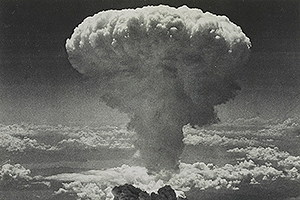
"Actually, I hardly feel constrained to try to make head or tails of this condition of the world. On this planet a great number of civilizations have perished in blood and horror. Naturally, one must wish for the planet that one day it will experience a civilization that has abandoned blood and horror; in fact, I am...inclined to assume that our planet is waiting for this. But it is terribly doubtful whether we can bring such a present to its hundred - or four-hundred-millionth birthday party. And if we don't, the planet will finally punish us, its unthoughtful well-wishers, by presenting us with the Last Judgment"  - Walter Benjamin, letter from Paris dated 1935.